

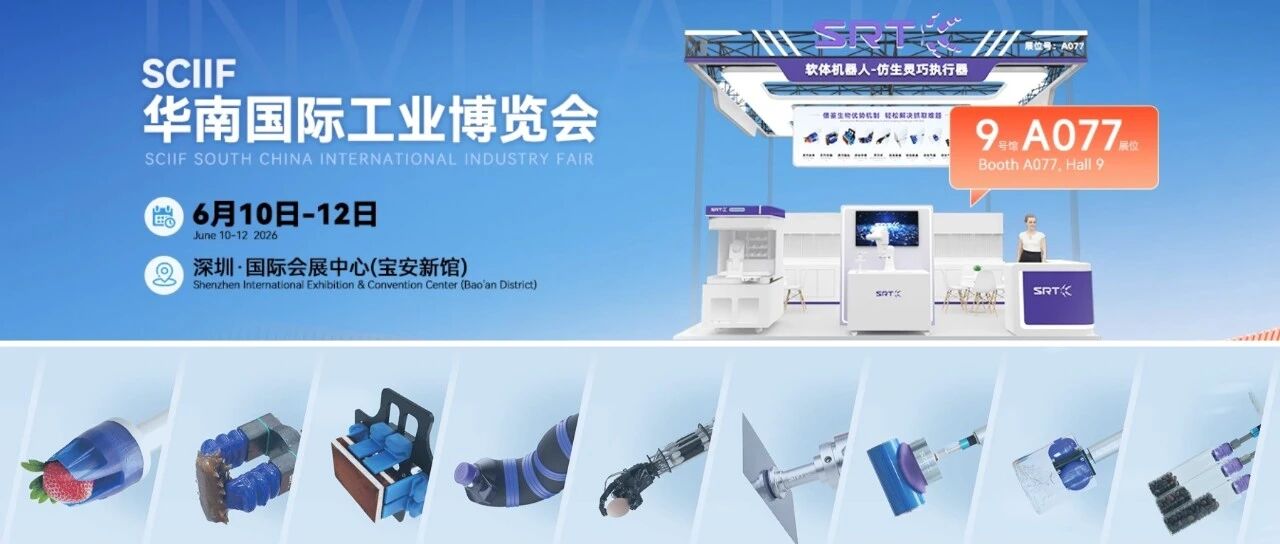
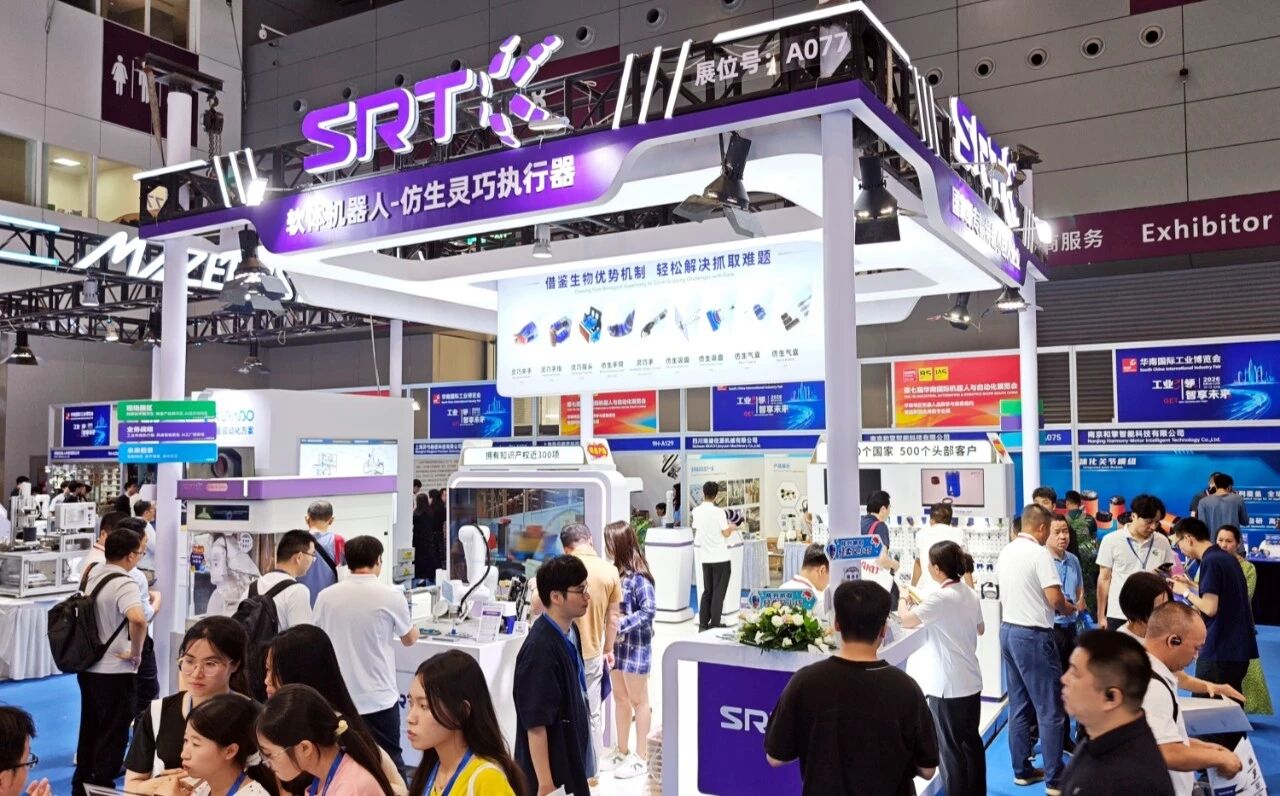
As the Greater Bay Area intelligent manufacturing event is in full swing, SRT – an enterprise in the soft robotics field with full‑chain industry‑university‑research innovation capabilities – is featuring over 100 products and cutting‑edge technologies across three exhibition zones and nine series at Booth A077, Hall 9 of SCIIF 2026. This article will take you through the core exhibits, innovative technologies, and AI applications presented at the fair, offering a glimpse of the latest achievements in flexible intelligent manufacturing and embodied AI.
Core
Products
Flexible Gripping Empowers Emerging Industries
Making Irregular and Fragile Workpieces Easy to Handle
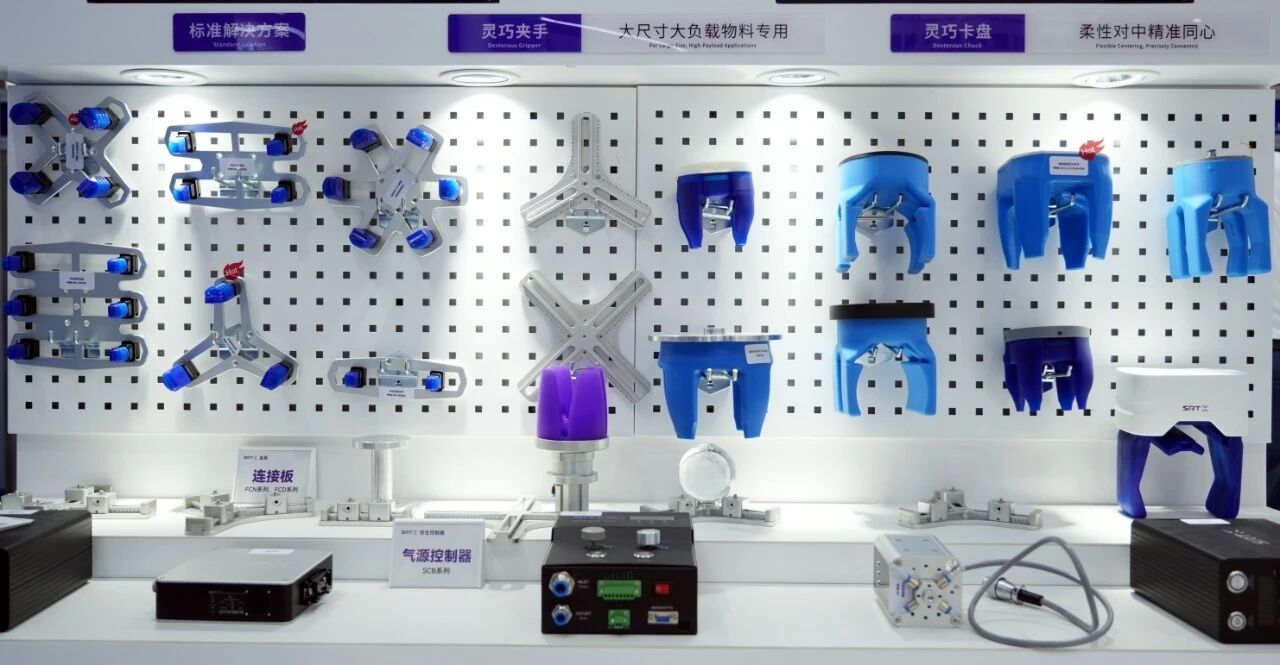
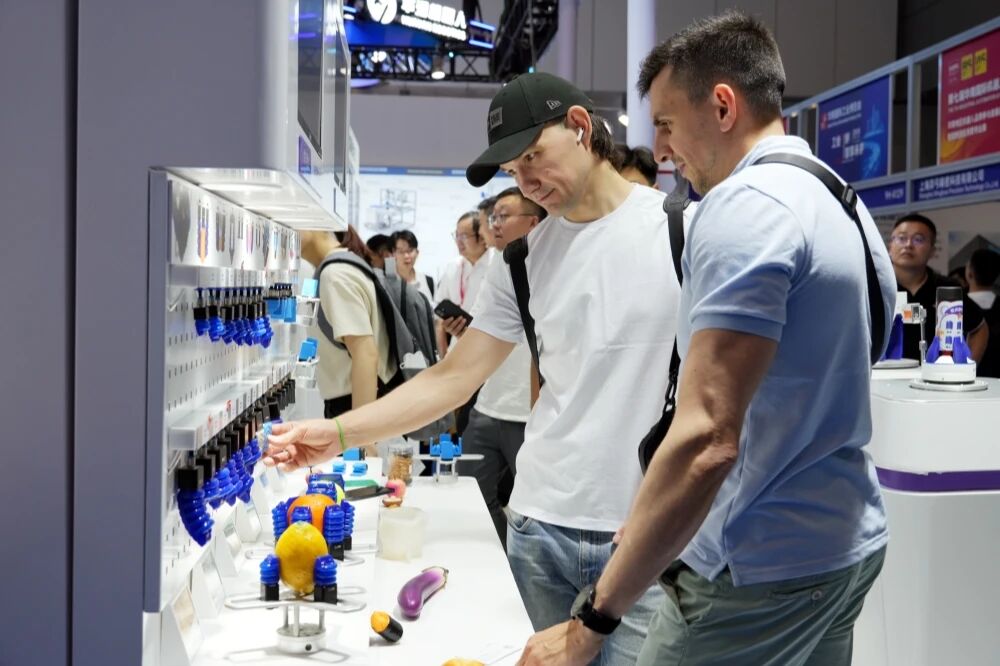
In the core products exhibition area, SRT’s full range of bionic dexterous end effectors are on display, covering various forms including bionic airbags, bionic suction cups, dexterous grippers, dexterous fingers, and dexterous tips. As a core enabler of the emerging flexible manufacturing industry, the technological innovation and scenario adaptability of bionic dexterous end effectors have drawn significant attention. Featuring bionic materials and adaptive structural design, this product series achieves flexible, non‑destructive gripping – handling even delicate items such as eggs, cakes, and electronic components with care. Breaking through the technical limitations of traditional rigid end effectors in fine‑operation scenarios, the series provides a key solution for emerging industries demanding high precision and low‑damage production.
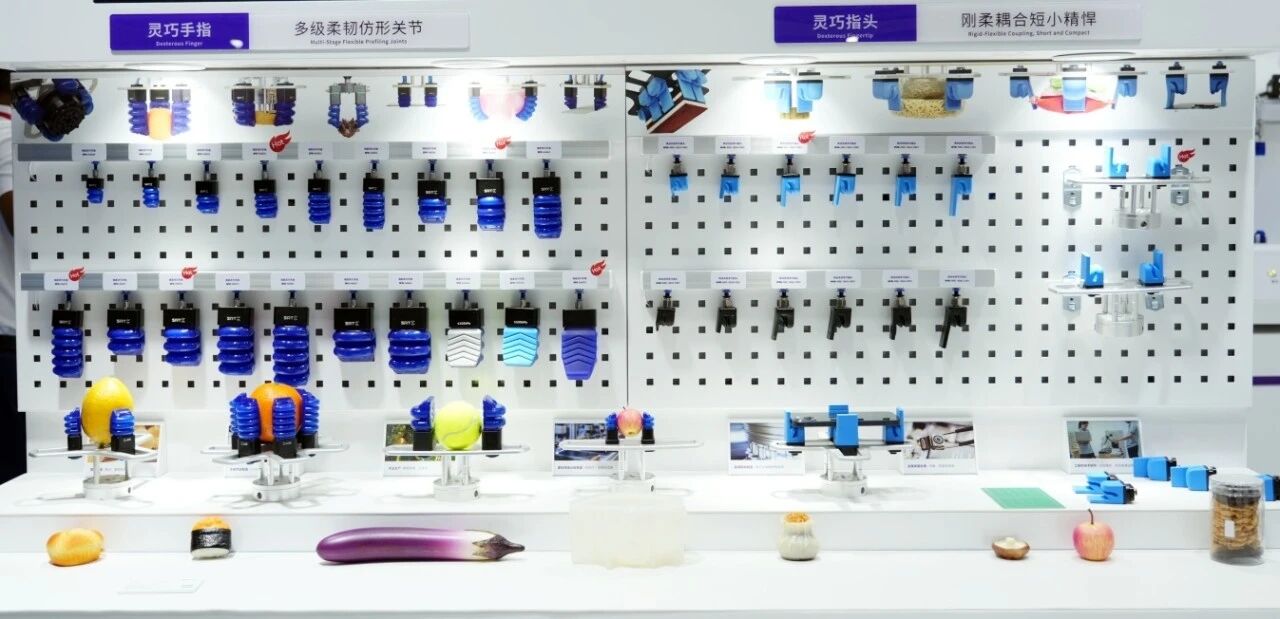
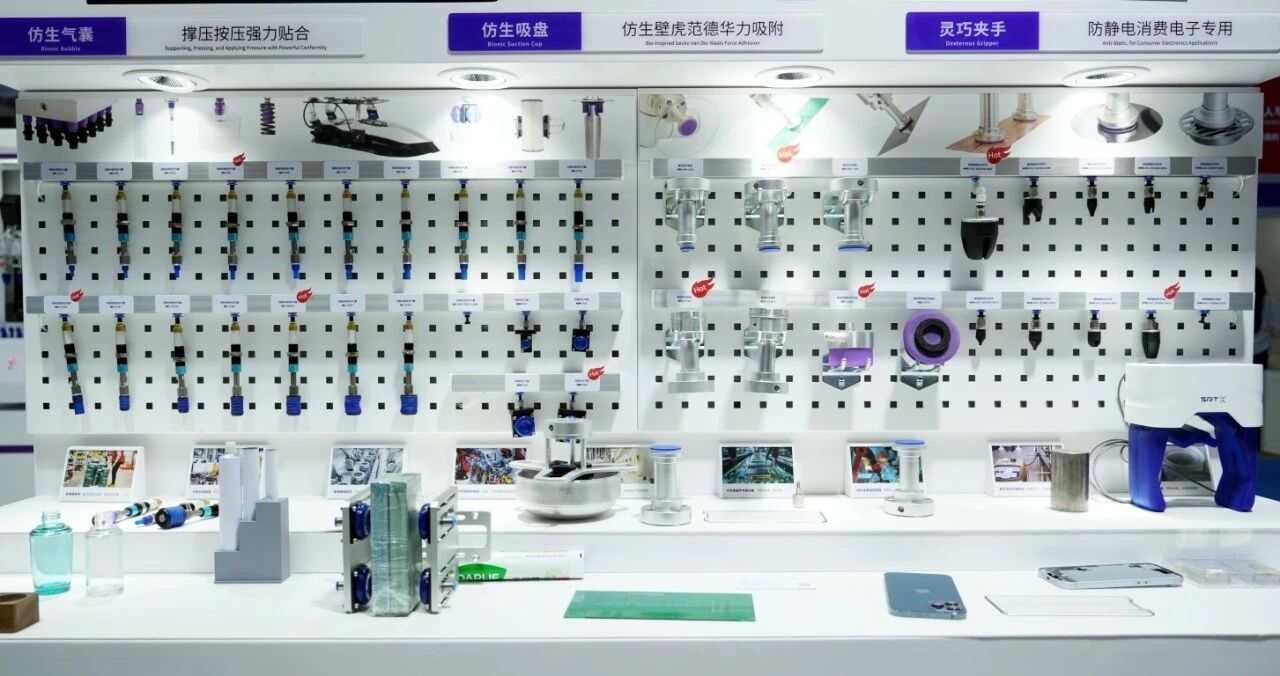
To date, these products have been deeply integrated into intelligent manufacturing scenarios such as flexible processing of fresh food, precision manufacturing in 3C electronics, and lightweight assembly in the automotive industry. They have also extended into cross‑sector fields including intelligent assistance in healthcare, bionic experiments in education and research, and precision operations in modern agriculture. Effectively solving the “last centimeter” handling challenge of irregular and fragile items in the automation upgrades of multiple industries, they represent a powerful choice for empowering the transformation from traditional industries to emerging ones and for cultivating new quality productive forces.
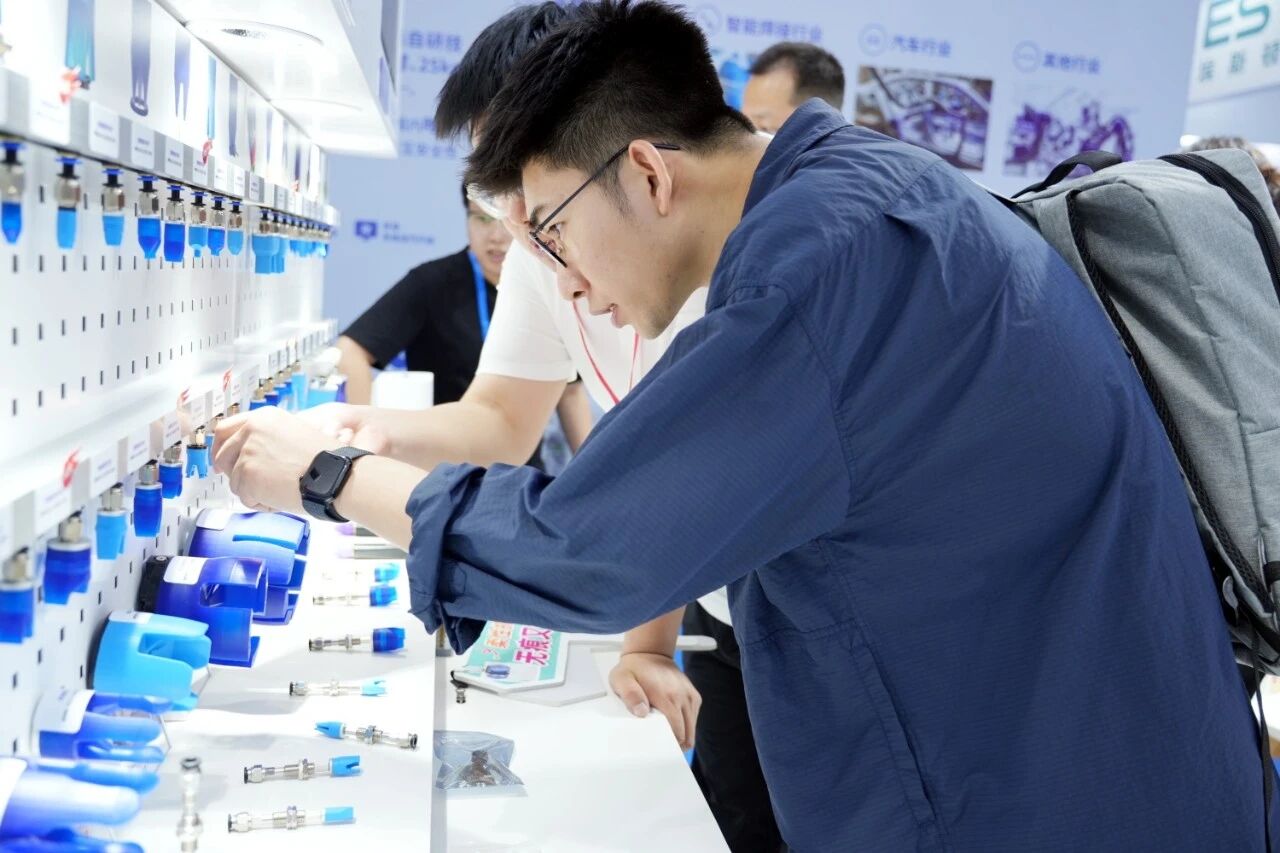
The bionic dexterous end effector product range is highly diverse, covering the full spectrum of scenarios – from lightweight precision operations to heavy‑duty handling of large workpieces. Targeted solutions are available for special working conditions such as clean rooms, low‑temperature environments, sterile and dust‑free workshops, and vacuum scenarios. Users can flexibly select the appropriate type based on different workpiece shapes and operational needs, with customized development also supported.
Product
Expansion
Flexibility and Intelligent Perceptionin
New Applications Fill Key Capability Gaps
In response to the demand for flexibility and intelligence in precision assembly and multi‑scenario adaptation in industrial production, SRT is presenting three new applications for the first time at this exhibition: intelligent grippers, a dexterous chuck, and an adjustable‑pitch module. Unlike traditional grippers that rely solely on mechanical structures for adaptation, this new generation of products is evolving from “structural flexibility” to “perceptive intelligence,” gradually integrating multiple types of sensors such as tactile, visual, and acoustic sensors. Among them, the intelligent gripper series is equipped with built‑in multimodal sensors – including basic pressure, displacement, thermal imaging, and sound. They not only capture subtle workpiece deformations and contact force distribution in real time, but also detect temperature changes and abnormal sounds such as dropping, collision, and foreign object presence, enabling millisecond‑level adaptive gripping decisions and significantly enhancing operational safety and reliability. The dexterous chuck, serving as a secondary positioning fixture, adapts to complex curved surfaces and tiny features, achieving flexible centering and precise concentric alignment, thereby helping to improve the yield of precision assembly.
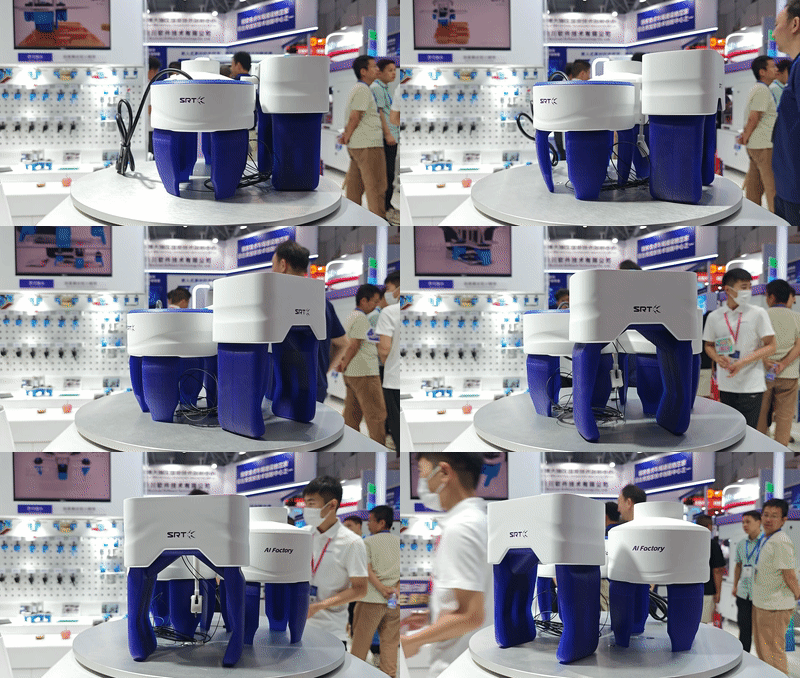
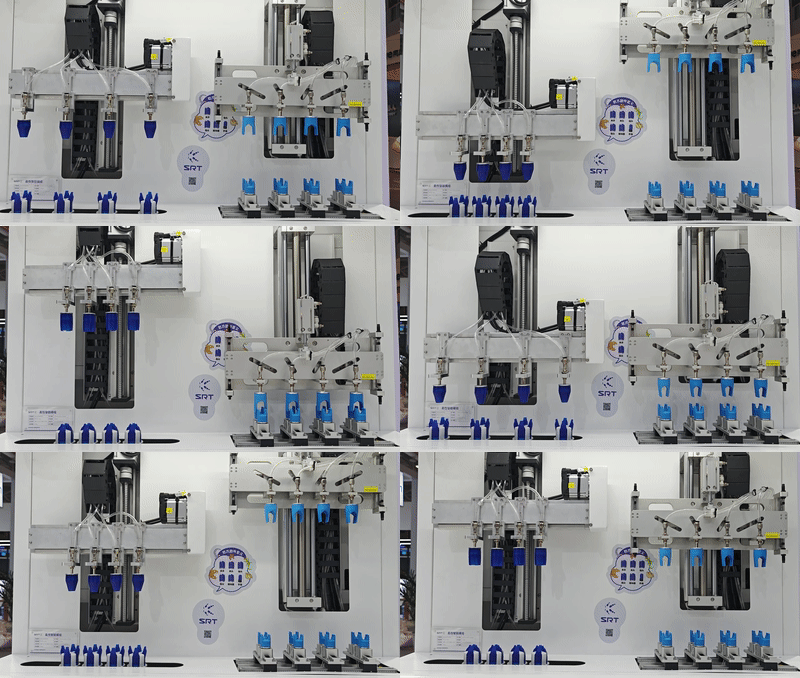
As an innovative extension of traditional pneumatic and electric actuators, the adjustable‑pitch module breaks through the rigidity limitations of conventional grippers while retaining stable transmission characteristics. It not only supports dynamic, adaptive pitch adjustment for flexible array‑based gripping, but also precisely matches the takt time requirements of different production lines – whether for high‑speed, high‑throughput scenarios or slower‑pace precision assembly needs. This feature effectively addresses the diverse and differentiated operational requirements of production lines, helping customers upgrade from rigid automation to flexible intelligence.
Future
Innovation
Artificial Muscles + Flexible Joints
Expanding the Boundaries of Industrial and Non‑Industrial Applications
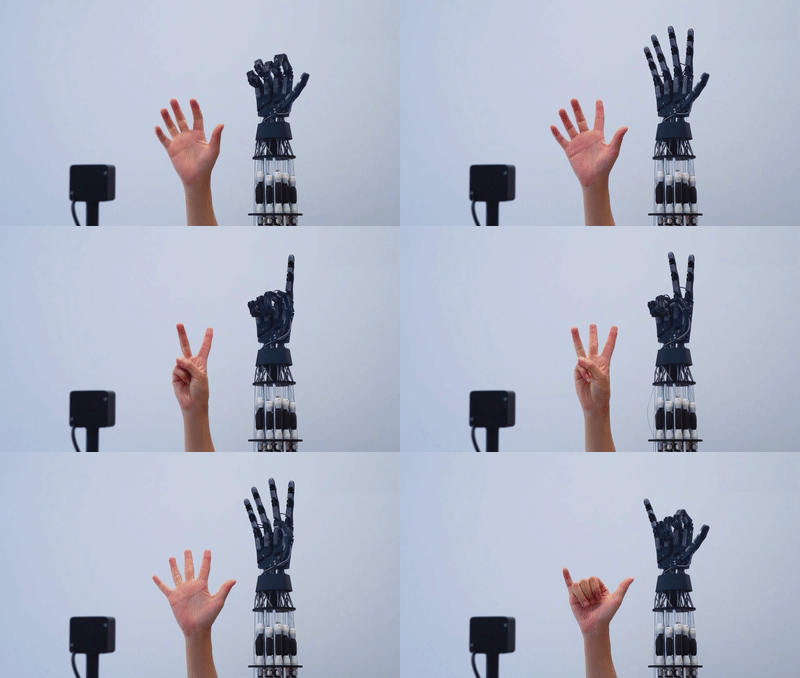
In the innovative technology exhibition area, SRT’s soft dexterous hand and Chordata™ bionic arm – as cutting‑edge technology prototypes – offered visitors a glimpse of the future evolution of soft robotics technology in tomorrow’s industries. The soft dexterous hand, powered by artificial muscle technology, is capable of simulating a wide range of human hand movements – such as grasping, holding, pinching, and clamping – featuring a high degree of bionic realism, excellent impact resistance, and a lightweight design. Visitors could also control the soft dexterous hand in real time through their own hand gestures, experiencing the technology’s appeal firsthand.
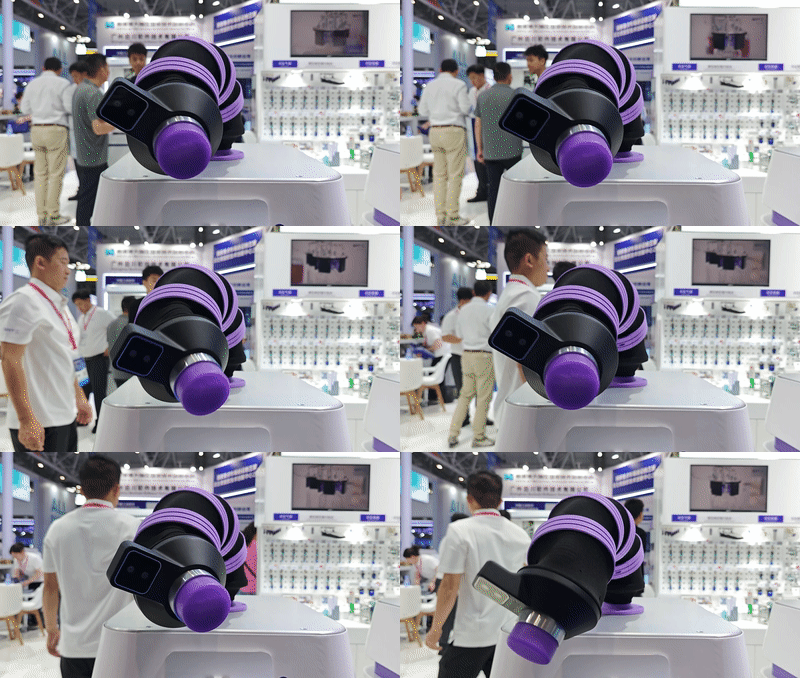
The Chordata™ bionic arm breaks through the limitations of traditional rigid structures. With its flexible joints and continuum architecture, it achieves omnidirectional, multi‑degree‑of‑freedom motion and performs dynamic obstacle avoidance based on visual recognition. In the future, this product is expected to deliver significant value in areas such as industrial precision assembly, medical rehabilitation assistance, special‑environment operations, and education and research.
AI
Interaction
Hand‑Eye‑Brain Collaboration
Embodied AI Delivering Convenient Services
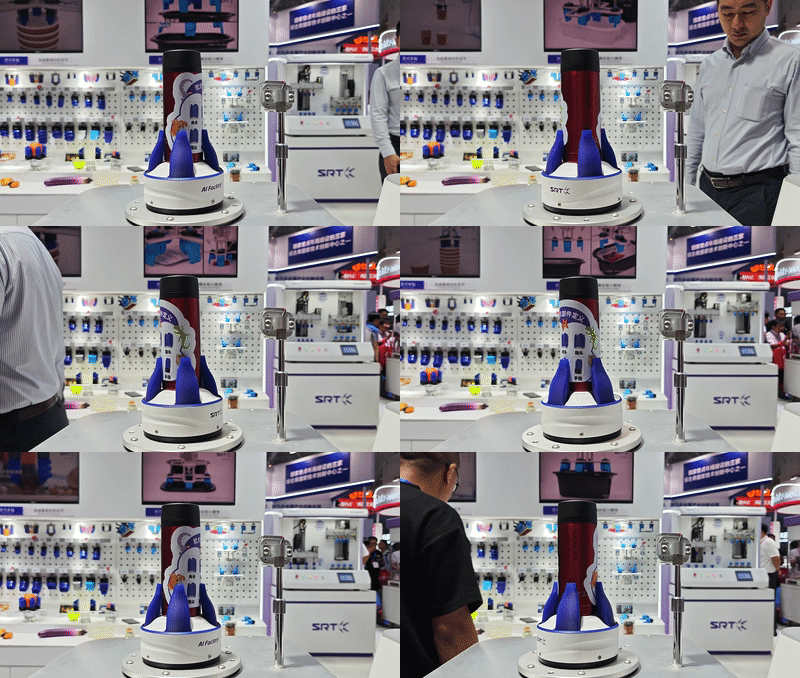
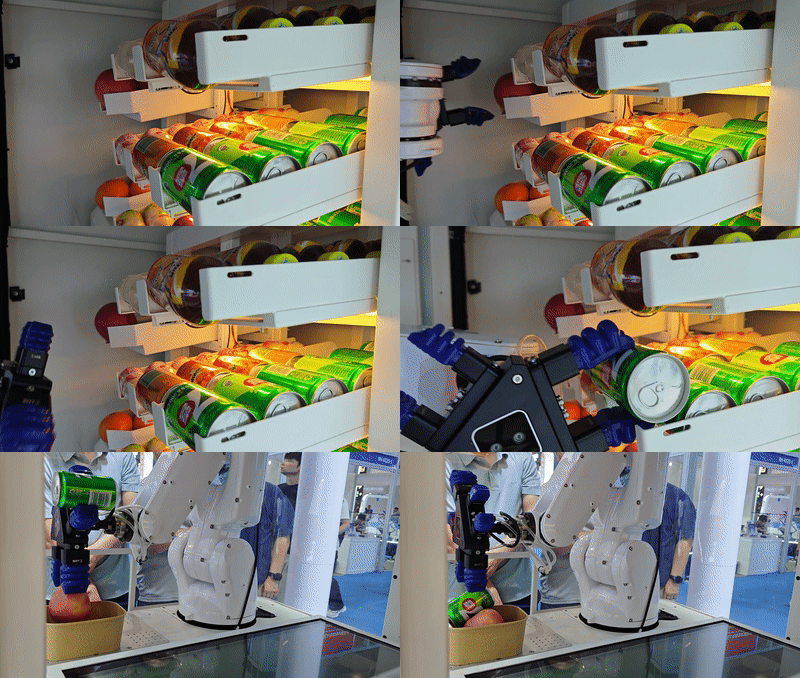
Complementing the industrial applications of core products, the AI Interaction area features SRT’s embodied AI platform built on a vertical large model and multimodal agents – the Soft Robot AI Workstation – which achieves “hand‑eye‑brain” collaborative intelligence and redefines the boundaries of intelligent service. The platform integrates a composite‑function bionic dexterous end effector with an integrated 3D vision motion control and drive system. Users can engage in professional Q&A through voice conversations or trigger personalized services via text commands. The platform autonomously performs image capture, analysis, and motion control command orchestration, and drives the robot to execute scenario‑based tasks such as meal recommendations and serving. In addition, a digital twin engine showcases the potential of AI‑driven digital applications through a combination of virtual and real elements. The AI Workstation covers multiple typical scenarios including food service, industrial inspection, and process digitalization, further demonstrating the capability expansion from single‑point gripping to intelligent decision‑making.
Against the backdrop of industrial digitalization and the development of new quality productive forces, the application scenarios of soft robotics continue to expand. According to China Development Report 2025 released by the Development Research Center of the State Council, China’s embodied AI market size is expected to exceed one trillion yuan by 2035. As one of the earliest enterprises in China to venture into soft robotics technology, SRT – while continuously improving its flexible production solutions – is actively exploring the integration of multimodal intelligent perception and intelligent control, helping soft robotics evolve from single‑purpose execution tools into embodied AI systems capable of complex environmental interaction. Moving forward, SRT will continue to prioritize industry‑university‑research collaborative innovation, deepen the integration of flexible technology with AI, and deliver more targeted solutions for the transformation and upgrading of manufacturing and the growth of new quality productive forces – bringing flexible intelligence to thousands of industries.5:35